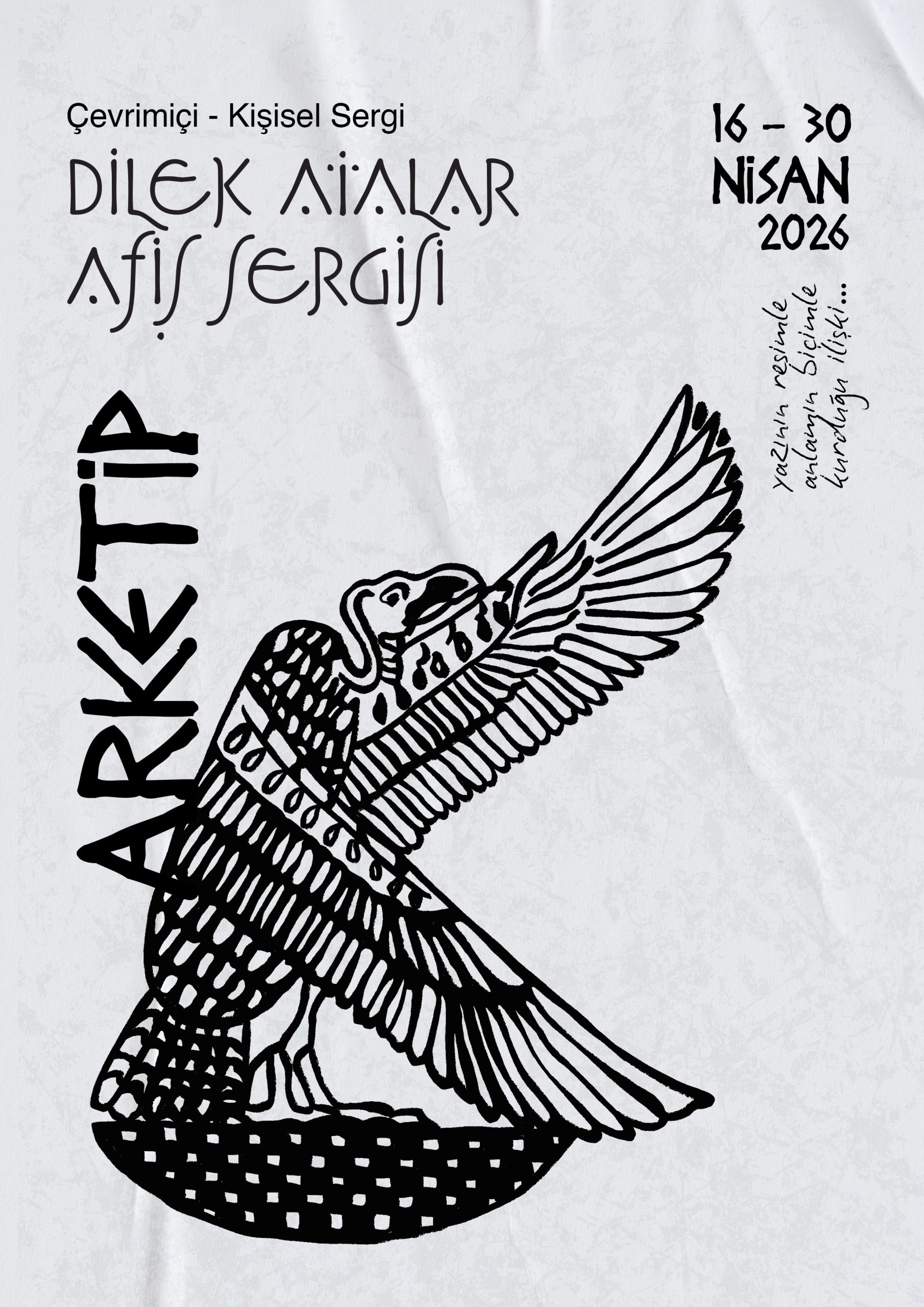
DİLEK ATALAR – “ARKETİP” ÇEVRİMİÇİ KİŞİSEL AFİŞ SERGİSİ
“Dilek Atalar – Arketip… Online Solo Exhibition”
Sergi Manifestosu
“Arketip”, Antik Mısır hiyerogliflerini yalnızca tarihsel bir yazı sistemi olarak değil, görsel iletişimin bir tasarım pratiği olarak yeniden sunmaktadır. Her afiş, bir sembolün ardındaki hikayenin hem fonetik hem kavramsal hem de görsel boyutunu bugünün tasarım dili aracılığıyla yeniden üretir. Böylece yazının resimle, anlamın biçimle kurduğu ilişki zamansal bir köprü üzerinden bugüne yansıtılmaktadır.
Sergide kullanılan tipografik ve görsel müdahaleler, yalnızca estetik bir yeniden üretim değil; aynı zamanda sembol, anlam ve temsil arasındaki ilişkinin yeniden kurgulanmasıdır. Bu sergide afiş dili, yalnızca bir taşıyıcı yüzey değil; yazının kökenine dair yeni bir farkındalık ortaya koymaktadır. Geçmişin kodları ile bugünün görsel kültürü arasında kurulan bu ilişki, yazının hem bir hafıza nesnesi hem de sürekli yeniden yazılan bir sistem olduğunu gösterir.
Afişler, tarihsel bir yazı sistemini yeniden üretmekten çok, onu yeniden düşünmeye davet etmektedir. Her anlatım, yalnızca bir yazının temsilcisi değil; aynı zamanda görsel iletişimin sürekliliğini hatırlatan bir izdir. Böylece sergi, yazının kökenine işaret ederken, tasarımın dönüştürücü gücü aracılığıyla geçmiş ile şimdi arasında eleştirel ve üretken bir diyalog kurmaktadır.
Sergide, hiyeroglifler yapay zekâ destekli üretim teknikleri aracılığıyla harekete geçirilerek sabit formdan devinimsel bir yapıya dönüştürülür. Yapay zekâ aracılığıyla üretilen bu devinim, hiyerogliflerin tarihsel olarak donmuş anlamlarını çözerken, onları değişken ve yeniden üretilebilir bir görsel dile dönüştürür. Böylece yazı, sabit bir kayıt sistemi olmaktan çıkar; yaşayan, dönüşen ve izleyiciyle etkileşim kuran bir yapıya evrilir. Bu yaklaşım, çağdaş tasarım pratiklerinde giderek önem kazanan üretken teknolojiler ile tarihsel görsel kültür arasında eleştirel bir bağ kurar.
Bu sergideki hiyeroglifler, Hilary Wilson’un Hiyeroglifleri Anlamak isimli eserinden kaynak alınmıştır. Hiyerogliflerin fonetik, ideografik ve determinatif yapısını açıkladığı yaklaşımından hareketle, sembol–anlam–biçim ilişkisini günümüz tasarım dili içerisinde afiş tasarımı yaklaşımı aracılığı ile yeniden üretilmiştir.
Exhibition Manifesto
“Arketip” reinterprets Ancient Egyptian hieroglyphs not merely as a historical writing system, but as a design practice within visual communication. Each poster reimagines the phonetic, conceptual and visual dimensions of the story behind a symbol through the lens of contemporary design language. In this way, the relationship between writing and image, and between meaning and form, is reflected in the present day via a temporal bridge.
The typographic and visual interventions used in the exhibition are not merely an aesthetic re-creation; they also constitute a re-imagining of the relationship between symbol, meaning and representation. In this exhibition, the language of the poster is not merely a carrier surface; it reveals a new awareness of the origins of writing. This relationship established between the codes of the past and today’s visual culture demonstrates that writing is both an object of memory and a system that is constantly being rewritten.
Rather than merely reproducing a historical writing system, the posters invite us to rethink it. Each narrative is not merely a representative of a text; it is also a trace that reminds us of the continuity of visual communication. Thus, whilst pointing to the origins of writing, the exhibition establishes a critical and productive dialogue between the past and the present through the transformative power of design.
In the exhibition, hieroglyphs are brought to life through AI-assisted production techniques, transforming them from a static form into a dynamic structure. This movement, generated by artificial intelligence, unravels the historically frozen meanings of the hieroglyphs whilst transforming them into a variable and reproducible visual language. Thus, writing ceases to be a static recording system; it evolves into a living, transforming structure that interacts with the viewer. This approach establishes a critical link between generative technologies—which are gaining increasing importance in contemporary design practices—and historical visual culture.
The hieroglyphs in this exhibition are drawn from Hilary Wilson’s work *Understanding Hieroglyphs*. Building on her approach to explaining the phonetic, ideographic and determinative structure of hieroglyphs, the relationship between symbol, meaning and form has been re-enacted within the contemporary design language through the medium of poster design.